
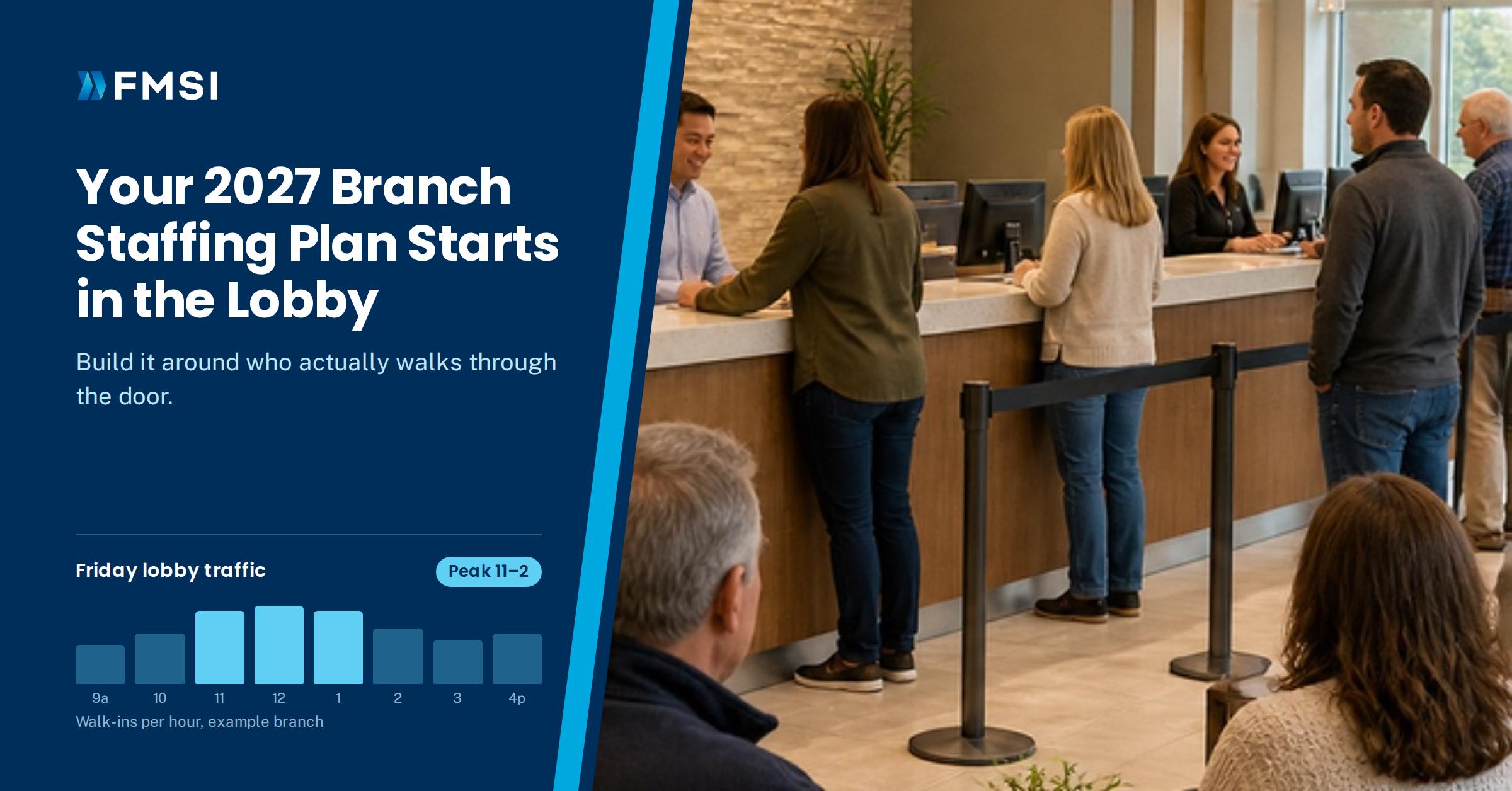
A 2027 branch staffing plan copied from last year's template puts people in the wrong place at the wrong hour.
Picture 11:40 on a Friday. Six members and customers are waiting in the lobby. Two tellers are on the line, and the one banker who handles loan conversations is at lunch. Across town, a second branch has three staff and an empty lobby.
Neither branch has a staffing problem. Both have a planning problem. Their schedules came from habit, not from who walks through the door. Here is how to build your 2027 plan around real traffic data, in five steps, before January.
Last year’s schedule reflects last year’s assumptions. A lot moves in twelve months: a payday shifts, a competitor closes a branch nearby, and routine transactions keep moving to the app.
In the American Bankers Association’s 2025 survey, 54% of bank customers said they manage their accounts most often on a mobile app, and 9% said they mostly visit a branch. The ABA points to the branch as the channel for more complex transactions. That’s the work your schedule has to protect.
Staffing is the one decision that sets your cost and your member experience at the same time, and the cost keeps climbing. The FDIC reported that salaries and employee benefits at insured banks rose 5.1% year over year in the third quarter of 2025. Get the hours wrong and you pay twice: idle staff in the valleys, long waits at the peaks.
Branch workforce planning built on traffic data answers three questions for every branch:
Answer those, and the schedule follows from the answers instead of from habit.
A staffing plan is only as good as its last review. Run it on a fixed calendar: